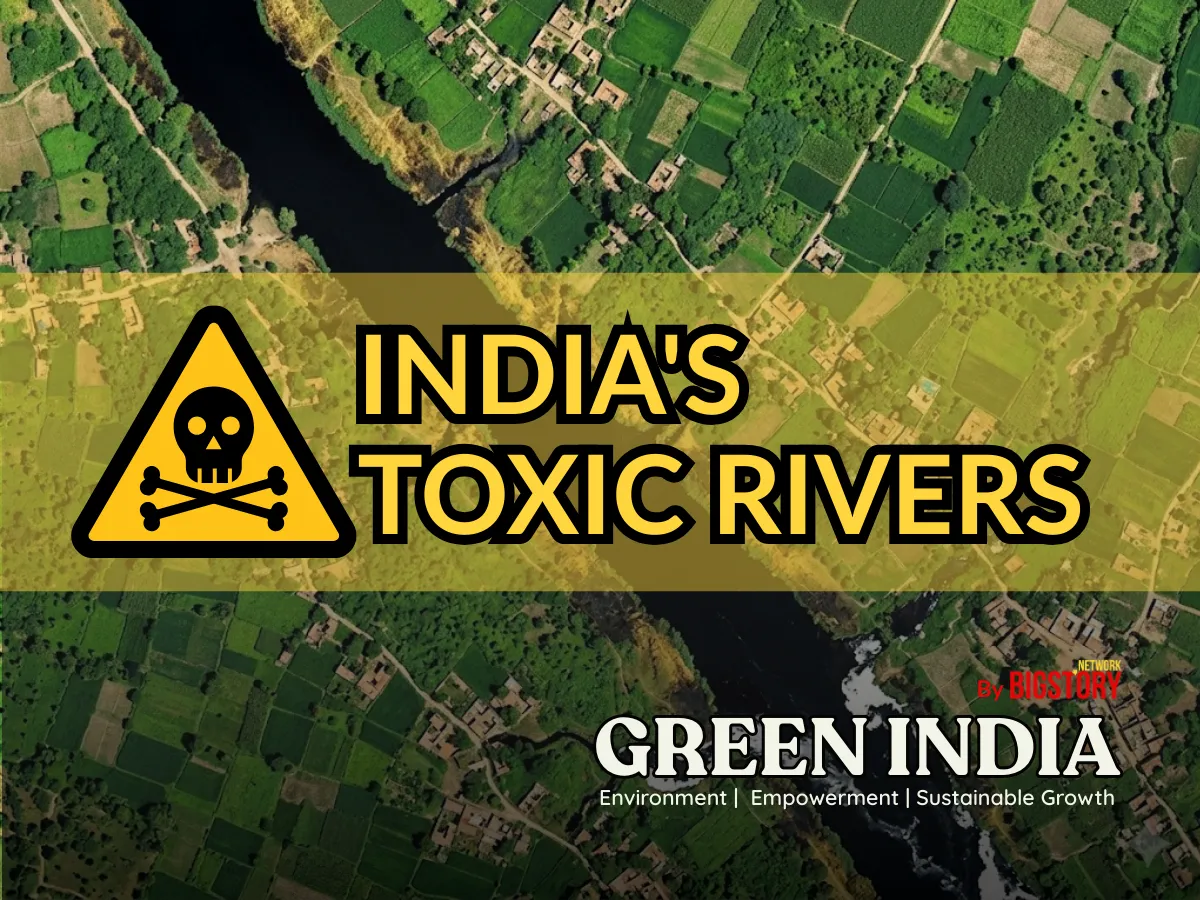
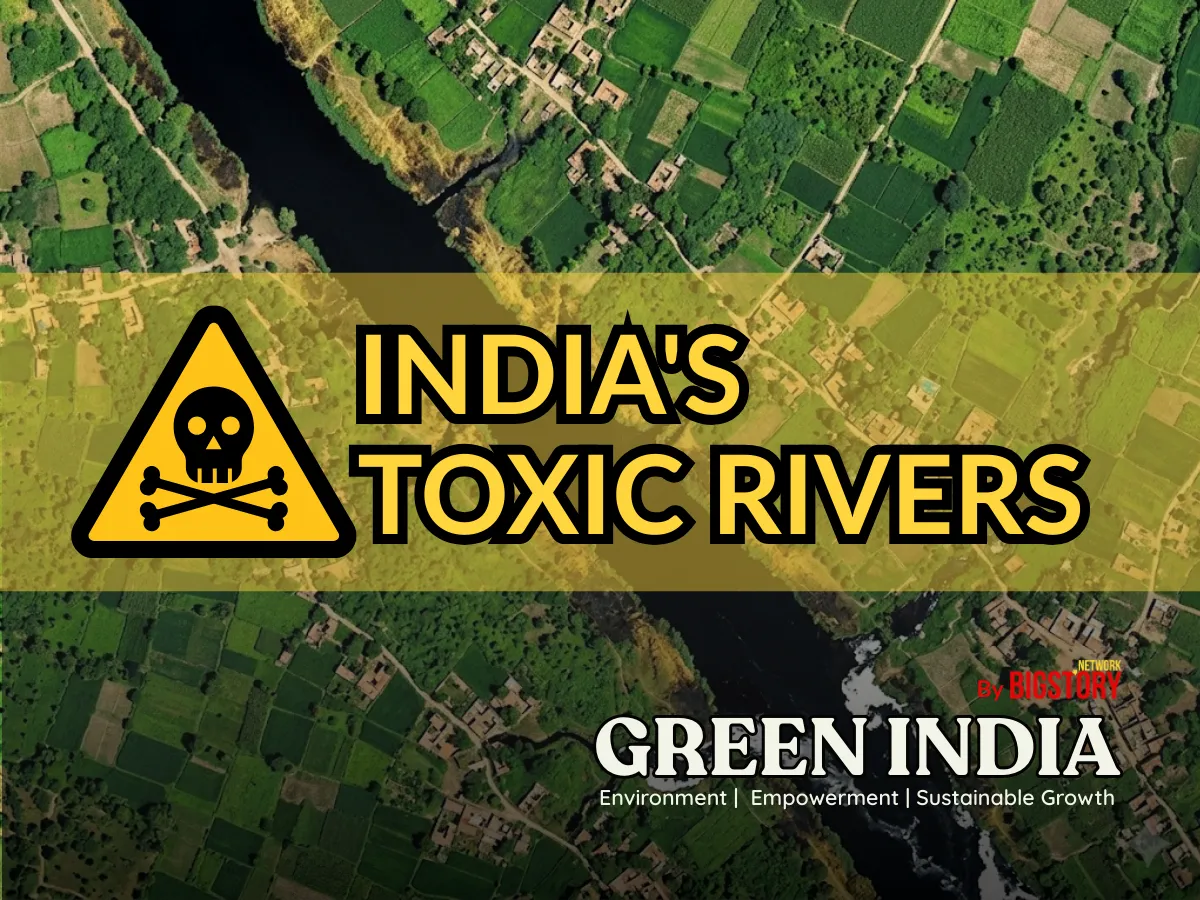
India's rivers don't just dry up in summer — they turn toxic. Dead fish, poisoned villages, collapsing livelihoods. Here's the crisis nobody is talking about.
 Minaketan Mishra
Every summer, the conversation about India's water crisis focuses on what is missing — shrinking reservoirs, delayed monsoons, depleted borewells. What almost nobody talks about is what remains.
The water left behind in India's rivers during the summer months is not simply scarce. It is chemically transformed — concentrated into a toxic cocktail of untreated sewage, industrial effluent, heavy metals, and pathogenic bacteria that renders it lethal to fish, livestock, agriculture, and human beings.
This is the Toxic Low-Tide. And it is destroying ecosystems, livelihoods, and lives across the Indian subcontinent — silently, systematically, and almost entirely out of public view.
To understand the Toxic Low-Tide, you first need to understand what a healthy river does underground.
Healthy rivers are fed from below. During dry summer months when surface precipitation is absent, rivers are sustained by groundwater discharge from surrounding aquifers — a mechanism called base flow. This base flow does three critical things: it maintains minimum water volume to sustain aquatic habitats, prevents total stagnation of the water column, and delivers a continuous supply of cooler, oxygenated, chemically stable water that regulates the river's entire thermal and biological profile.
When base flow functions correctly, rivers naturally dilute and purify themselves. When it fails, everything downstream collapses.
India's rampant, largely unregulated groundwater extraction — driven primarily by agricultural irrigation and exponential urban consumption — has systematically destroyed this mechanism. As regional water tables drop below the elevation of riverbeds, the hydrological gradient reverses. Rivers that were once fed by groundwater begin losing their remaining surface water downward into the depleted aquifer below. The base flow disappears. The river is left entirely dependent on erratic surface runoff — and whatever industrial and domestic waste is pumped into it.
In highly populated regions like the Mahanadi Delta — supporting 572 persons per square kilometre across districts like Cuttack, Puri, and Khurda — this collapse is compounded further by upstream infrastructure. Major dams like the Hirakud regulate surface flows for industrial water supply and hydropower, restricting the environmental flows required to maintain downstream ecosystem health. The combination of upstream damming and local groundwater depletion ensures that by the onset of summer, the physical volume of water available to absorb municipal and industrial discharge is a fraction of its historical baseline.
Here is the precise mechanism of destruction.
As river volume halves or reduces to a trickle, the absolute volume of untreated sewage, agricultural runoff, and industrial effluent discharged into that river does not decrease. It stays constant — or increases, driven by heightened urban water demand. The dilution factor that municipalities and industries have historically relied upon as passive, cost-free waste management drops to zero.
The result is exponential concentration of toxicity.
The Daya River — a historically significant 37-kilometre distributary of the Mahanadi basin and the primary freshwater lifeline of Chilika Lake, Asia's largest brackish lagoon — provides one of India's most precisely documented illustrations of this dynamic.
As the Daya flows past the rapidly expanding urban agglomeration of Bhubaneswar, it receives massive quantities of untreated domestic sewage and industrial waste through the Gangua Nullah canal. A comprehensive assessment of the river's pollution trajectory spanning 2000 to 2025 reveals what researchers describe as the Regulatory Laxity Trap: state effluent discharge standards permit industrial BOD discharges of up to 30 mg/L, while a healthy river ecosystem requires BOD of 5 mg/L or less. When summer reduces the river's volume, these legally permitted discharges overwhelm its assimilative capacity entirely.
The chemical data tells the story with brutal precision:
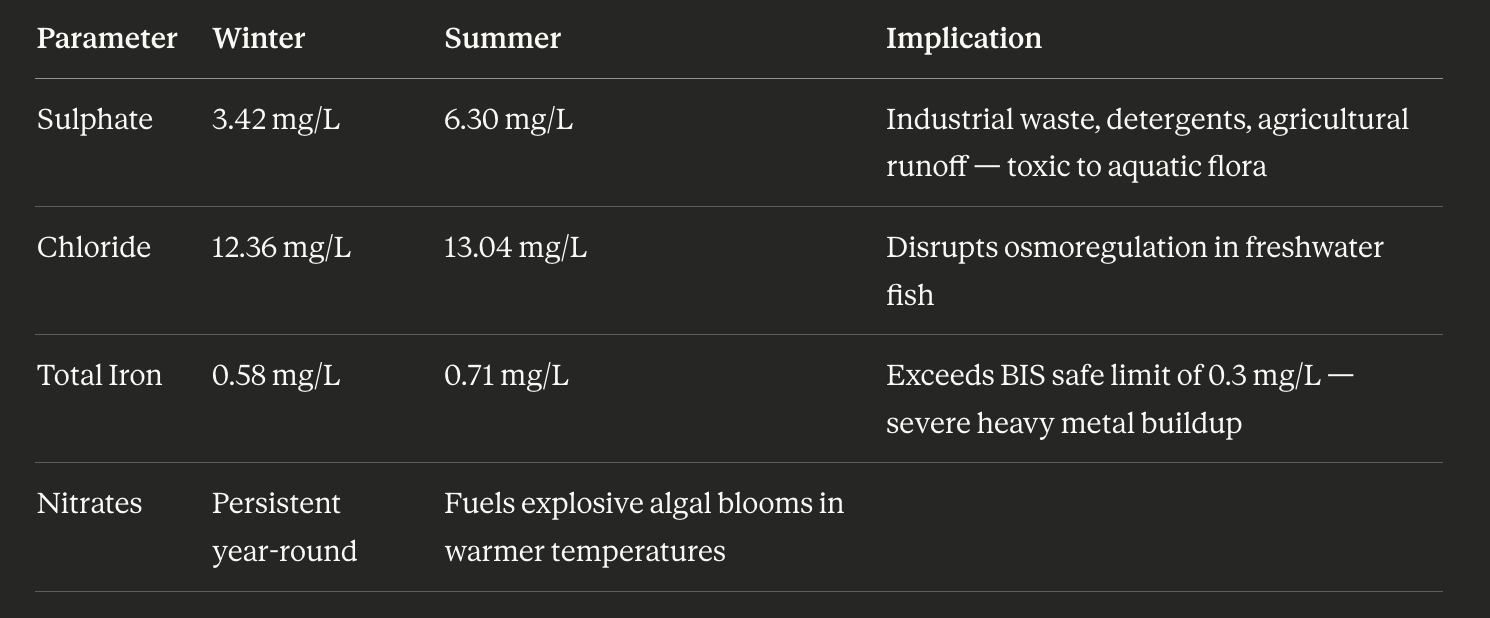
Beyond these parameters, studies consistently detect Lead, Chromium, Cadmium, Zinc, and Mercury in concentrated summer flows. Ingestion hazard indices for Arsenic, Cadmium, Chromium, Manganese, and Lead routinely exceed the threshold of 1 for both adults and children — indicating severe and immediate risk of adverse health outcomes including carcinogenic effects and dermatological disease.
The microbiological reality is equally catastrophic. Without sufficient water volume to flush domestic sewage, the river functions as a stationary incubator. Total Coliform and Faecal Coliform levels proliferate uncontrollably. Specific testing sites on the Daya have recorded coliform levels reaching 74,908 MPN per 100 ml — obliterating the permissible human safety limit of 500 MPN per 100 ml by a factor of 150. The river becomes an active vector for faecal streptococcus and E. coli.
At highly contaminated confluence points like Kanti village — where the Gangua drain merges with the Daya — the water turns black, emits a foul odour, and carries warnings against any physical contact whatsoever.
During the COVID-19 national lockdown, several major Indian rivers experienced measurable water quality improvements as industrial activity temporarily halted. The Yamuna saw BOD reduced by 42.83%. Faecal coliforms dropped by over 40%.
The Daya River did not improve.
Post-pandemic data showed BOD levels near Garage Chowk reaching 75 mg/L — fifteen times the safe limit. The reason: major industrial polluters in the Daya catchment continued operating throughout the lockdown, entirely offsetting any reductions in domestic waste. This data proves something critical and uncomfortable: the pollution dynamics of these rivers are systemically entrenched. They cannot be resolved by limiting domestic activity alone. The industrial point-source loads are fundamentally incompatible with the summer carrying capacity of the river.
The third compounding catastrophe is thermal — and it is the most visually dramatic.
When concentrated nutrient runoff — rich in nitrogen and phosphorus from agricultural fertilizers, untreated sewage, and industrial byproducts — meets searing summer temperatures, it triggers explosive Harmful Algal Blooms. These blooms initiate eutrophication: a deadly chain reaction that begins when algae proliferate across the water surface, blocking sunlight from reaching submerged vegetation and disrupting the base of the food web.
When the bloom dies, the true devastation begins. Bacterial decomposition of the massive accumulated algal biomass consumes vast quantities of dissolved oxygen from the water column. Physics compounds the problem — oxygen is inversely proportional to temperature, meaning warmer summer waters already hold significantly less dissolved oxygen than cooler winter waters. When the biological oxygen demand of millions of decomposing algal cells is superimposed on this thermally limited oxygen capacity, the water column becomes hypoxic — or in severe cases entirely anoxic.
The result: expansive dead zones where dissolved oxygen plummets below the critical survival threshold of 3 mg/L. Everything aerobic suffocates.
In Kerala, the convergence of summer heatwaves, industrial effluents spiking ammonia levels, and chemical pesticide runoff routinely triggers devastating mass fish kills. Entire populations of fish — trapped in isolated, stagnant pools created by receding water levels — simply suffocate. Human attempts to collect the dying fish muddy the water further, clogging gills with suspended particulate matter and accelerating asphyxiation.
The long-term ecological damage is permanent. Casualties frequently include endangered species like the red line torpedo barb and the Tameen barb. The mortality of brooders — mature fish ready to spawn — obliterates the reproductive future of entire populations in a single event.
The Daya River's ecological collapse does not stay local. It flows directly into Chilika Lake — a Ramsar-designated wetland spanning 1,165 square kilometres, the largest wintering ground for migratory birds on the Indian subcontinent, supporting over 107 species of water birds and complex populations of aquatic mammals and fish.
Because the Daya is only 37 kilometres long, heavy metals, concentrated sewage, and agricultural nutrients have almost no time for natural self-purification before reaching the lake. Annually, the river deposits approximately 1.6 million metric tons of heavily contaminated sediment into Chilika. This massive influx alters the lagoon's delicate salinity balance, narrows its mouth, and drives the aggressive proliferation of invasive freshwater weeds at the expense of native brackish species. The resulting hypoxia in the lagoon's northern sector directly threatens one of South Asia's most ecologically irreplaceable wetlands.
The communities that suffer most from this ecological collapse are almost never the communities that created it.
Urban centres, affluent municipalities, and industrial clusters generate the overwhelming majority of the pollution. The toxic burden is structurally externalized — carried downstream to vulnerable, rural, agriculturally dependent communities who had no say in its creation.
In downstream villages like Jagulaipadar and Nuadokanda, the traditional fishing economy has entirely collapsed. The contaminated water makes it biologically impossible for fish to survive. Fisherfolk who depend on Chilika Lake report that catching economically vital species — crabs, shrimps, finfish — has become increasingly difficult, directly threatening food security. The complete loss of fishing income has driven large-scale forced out-migration, with able-bodied community members abandoning ancestral homes for menial, high-risk urban labour in Kerala and Bengaluru.
Simultaneously, farmers in areas like the Kanas block who previously supplemented their incomes by growing dry-season vegetables can no longer irrigate — the river water is literally poisonous and laden with heavy metals. The land lies abandoned.
Across 115 villages along the lower Daya, residents suffer from severe gastrointestinal diseases, skin lesions, and suspected cancer clusters attributable to toxic water. Recent outbreaks of diarrhoea and jaundice have caused fatalities and mass hospitalisations. Women spend hours daily attempting to boil, strain, and purify toxic water. Daily-wage labourers spend ₹30 to ₹50 per day — a significant fraction of their income — purely on bottled water to avoid lethal infection. When illness strikes, medical debt is catastrophic: villagers have reported taking loans exceeding ₹50,000 to pay for treatment of waterborne diseases.
India generates an estimated 72,368 million litres per day of urban wastewater. Only 28% undergoes any form of treatment. 72% flows directly into rivers, lakes, and groundwater aquifers — untreated.
Conventional centralized Sewage Treatment Plants face insurmountable structural challenges in India — massive capital costs, exorbitant maintenance requirements, chronic bureaucratic delays, and consistent failure to connect to sprawling informal settlements. The one-size-fits-all model of piping millions of litres across vast distances to a single treatment facility has proven ecologically and economically unviable across most of the subcontinent.
The paradigm shift happening at the grassroots level is built on a radically different principle: intercept, treat, and reuse wastewater locally — before it ever enters the river.
Constructed Wetlands and Phytoremediation
The technological core of this approach is the Constructed Wetland — carefully engineered treatment basins filled with porous substrates like gravel and sand, densely planted with selected hyperaccumulating macrophytes. These are not decorative ponds. They are living biological factories operating through multiple simultaneous mechanisms:
Plant root systems physically filter suspended solids while directly absorbing dissolved nutrients and heavy metals from the water column. Absorbed pollutants are sequestered within root tissues or translocated into stems, rhizomes, and leaves — permanently removed from the aquatic environment. Aquatic plants continuously release oxygen from their root tissue, cultivating dense biofilms of pollutant-degrading bacteria that execute the bulk of BOD reduction and nutrient removal.
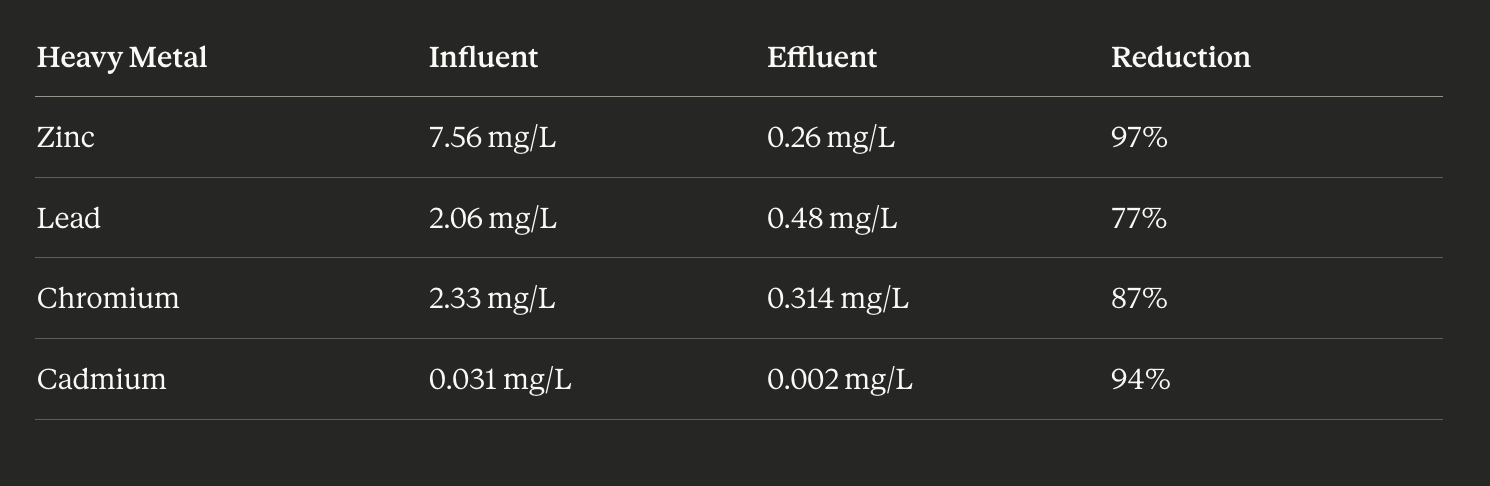
Two species stand above all others in Indian constructed wetlands: Canna indica (Indian shot) and Typha latifolia (broadleaf cattail). Both exhibit extraordinary tolerance to heavy metal toxicity and high organic loading. Canna indica's removal capacity from industrial wastewater is remarkable:
Odisha's Ama Pokhori Initiative
Recognising the failure of large STP projects to save localised water bodies, Odisha's Housing and Urban Development Department launched the Ama Pokhori — Our Pond — scheme, aiming to restore over 2,000 traditional waterbodies using strictly nature-based approaches. In Dhenkanal Municipality, heavily degraded urban ponds including Bhagirathisagar, Kunjakanta, and Badhi Pokhori were restored by mapping all sewage inlet points, constructing localised diversion channels, and building gravity-driven biological check dams. Crucially, ongoing maintenance was permanently handed to local Women's Self-Help Groups at the ward level — ensuring continuous monitoring and preventing the relapse into degradation that plagues contractor-built infrastructure. Result: surrounding groundwater for these specific ponds returned to the Safe classification.
The Seechewal Model of Punjab
Pioneered by environmentalist Sant Balbir Singh Seechewal to rescue the heavily polluted Holy Kali Bein river, the Seechewal Model is perhaps India's most globally recognised grassroots wastewater intervention. Using massive community volunteer effort, the model builds low-cost underground sewerage systems that direct village wastewater into a series of constructed oxidation wells and ponds for biological treatment. The revolutionary element is circular economy thinking — treated, nutrient-rich water is pumped directly to surrounding agricultural fields for irrigation, eliminating the pollution point-source while solving local irrigation demand simultaneously. The community has also undertaken massive afforestation of community lands, transforming cremation grounds into mango tree parks and establishing horticulture nurseries that stabilise riverbanks and restore local microclimate.
Tarun Bharat Sangh: Reviving the Base Flow
While phytoremediation addresses pollutant concentration, Rajendra Singh's Tarun Bharat Sangh in Rajasthan addresses the root hydrological cause: the loss of base flow itself. By mobilising hundreds of villages to reconstruct thousands of traditional earthen check-dams — johads — across drainage lines, TBS slows monsoon surface runoff and allows it to percolate deep into soil, artificially recharging depleted aquifers. The result: the natural base flow of five rivers that had been completely dry for decades was successfully revived. The hydrological disconnect driving the summer crisis can be reversed — through localised, nature-based earthworks and community stewardship.
The Toxic Low-Tide is not a natural disaster. It is an engineered one — the predictable consequence of treating rivers as free waste disposal systems while simultaneously destroying the groundwater base flow that kept them alive.
The solution requires a dual approach executed simultaneously. First, restore groundwater aquifers through decentralised community-managed rainwater harvesting — johads, check dams, recharge structures — to re-establish the base flow that provides natural riverine resilience. Second, deploy constructed wetlands using high-efficiency phytoremediation species like Canna indica and Typha latifolia at the village, municipal ward, and industrial cluster level — intercepting and neutralising domestic sewage and industrial effluent before it reaches the ecosystem.
The models from Odisha, Punjab, and Rajasthan prove it is achievable. When local communities are empowered with nature-based technologies and genuine authority to manage them, they can treat their own waste, reclaim their water security, and protect the ecological integrity of entire river basins.
The river can be saved. But not by the same logic that poisoned it.
 Exclusive Content






Sign up for the Daily newsletter to get your biggest stories, handpicked for you each day.

 Trending Now! in last 24hrs